Types of Service
Pruning
Pruning is the selective removal of plant parts to meet specific goals and objectives. While often done for aesthetic reasons, the most important goal of pruning is to develop strong structure in the trees' branches. This will reduce the likelihood of breaks and other failures. Other reasons to prune a tree are to provide clearance for surrounding objects, improve a view, influence flower and fruit production, or to reduce shade or wind resistance. Reducing the tip weight through thinning and reduction cuts is importance to reduce snow loading and chance of failure from the added weight. High Bar Arborist Services knows how to make proper cuts to meet the customer's goals and to promote the health of the tree, following the national standards for pruning as described in ANSI A300 part 1.
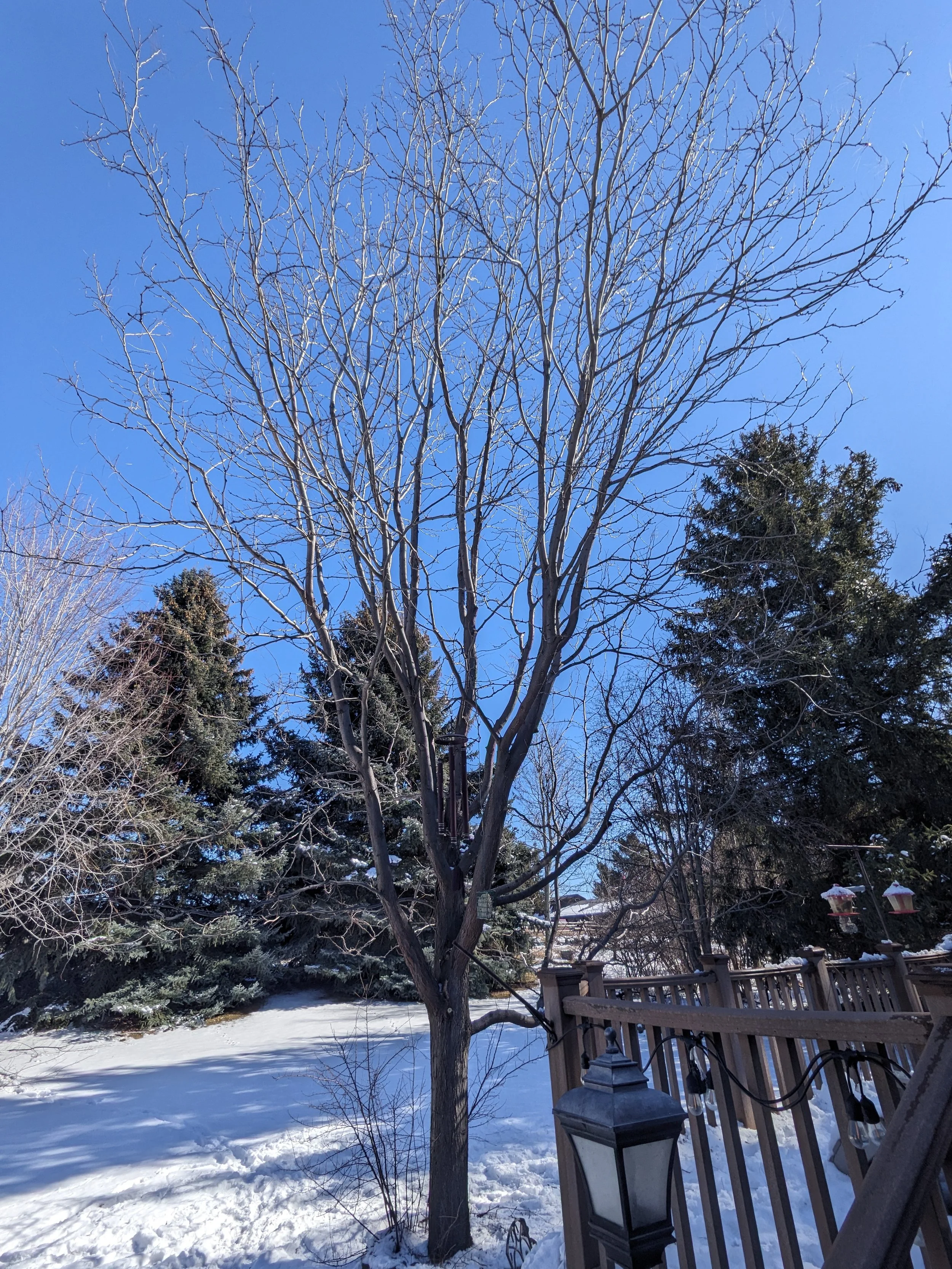
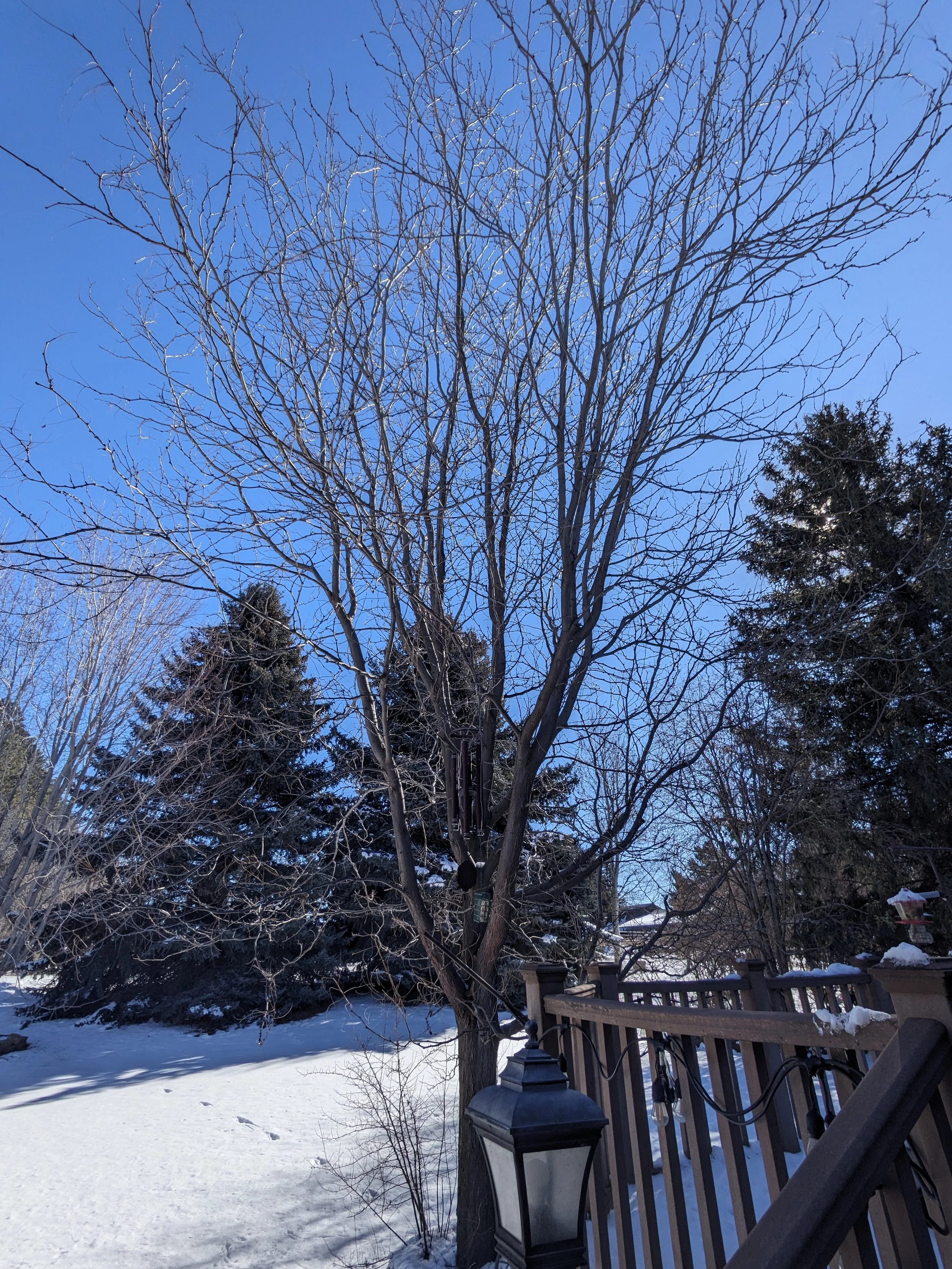
Before and after of a structural prune on a young honeylocust (Gleditsia tricanthos inermis)
Tree Removal
There are many reasons to have a tree removed. Trees can become hazards when they die or are in poor health from pests, disease, neglect, or poor site conditions. Trees may be interfering with structures due to poor placement in the landscape. Often the species of tree planted or growing in a location is incompatible with the desired use of the site. Tree removals over obstacles such as houses and fences are not an issue for High Bar Arborist Services. Owner Colin McKim has the skill, experience, and equipment to safely remove a tree in most locations. When a tree requires specialized equipment such as aerial lifts and cranes, he has experience working with others to bring in outside resources.
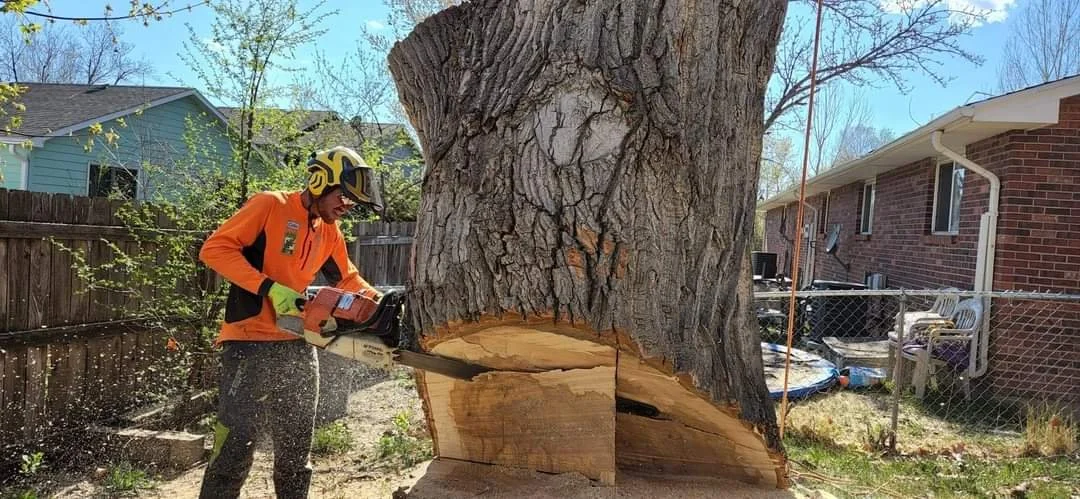
Colin making a notch on a large cottonwood removal in Longmont, CO
Tree Cabling
What is cabling?
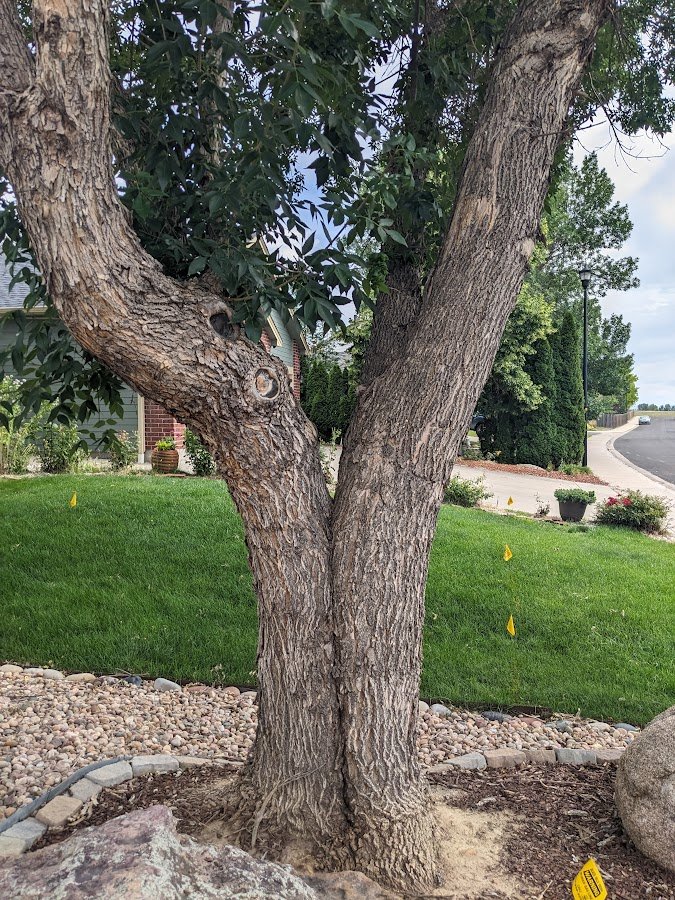
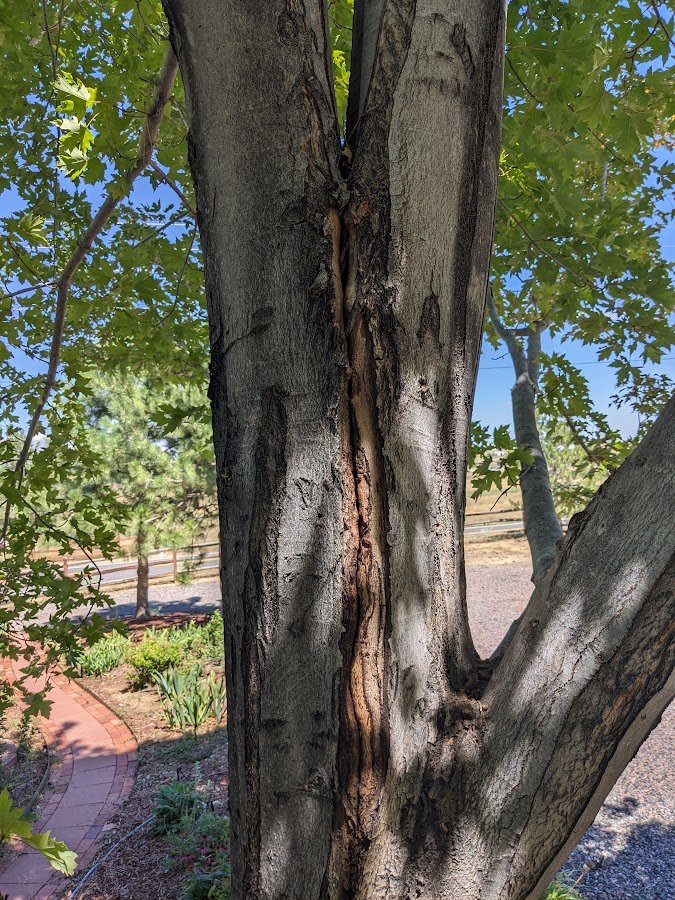
Tree cabling is a type of support system for structurally compromised trees. To reduce the risk of tree structural failure, steel or synthetic rope is attached to limbs to provide artificial support, preventing failures at the branch unions. Pictured below are are a green ash and hybrid maple that are candidates for cabling.
Why cable?
Trees sometimes have structural weaknesses, which can be a result of poor branch attachment angle, decay, improper past care, storm damage, growing site conditions, or other factors. Pruning can reduce loads on these weak points, but it will not strengthen the weak union. Cabling links branches high in the canopy to give extra support. Limbs over structures will often benefit from cabling when the branch attachment point is suspect or there is a high consequence to limb failure. Cabling allows customers to keep trees in their landscape rather than remove them to mitigate risk. With the time it takes to grow trees to maturity and the many ecosystem services that trees provide, cabling fills a critical role in arboriculture by allowing trees to continue to thrive.
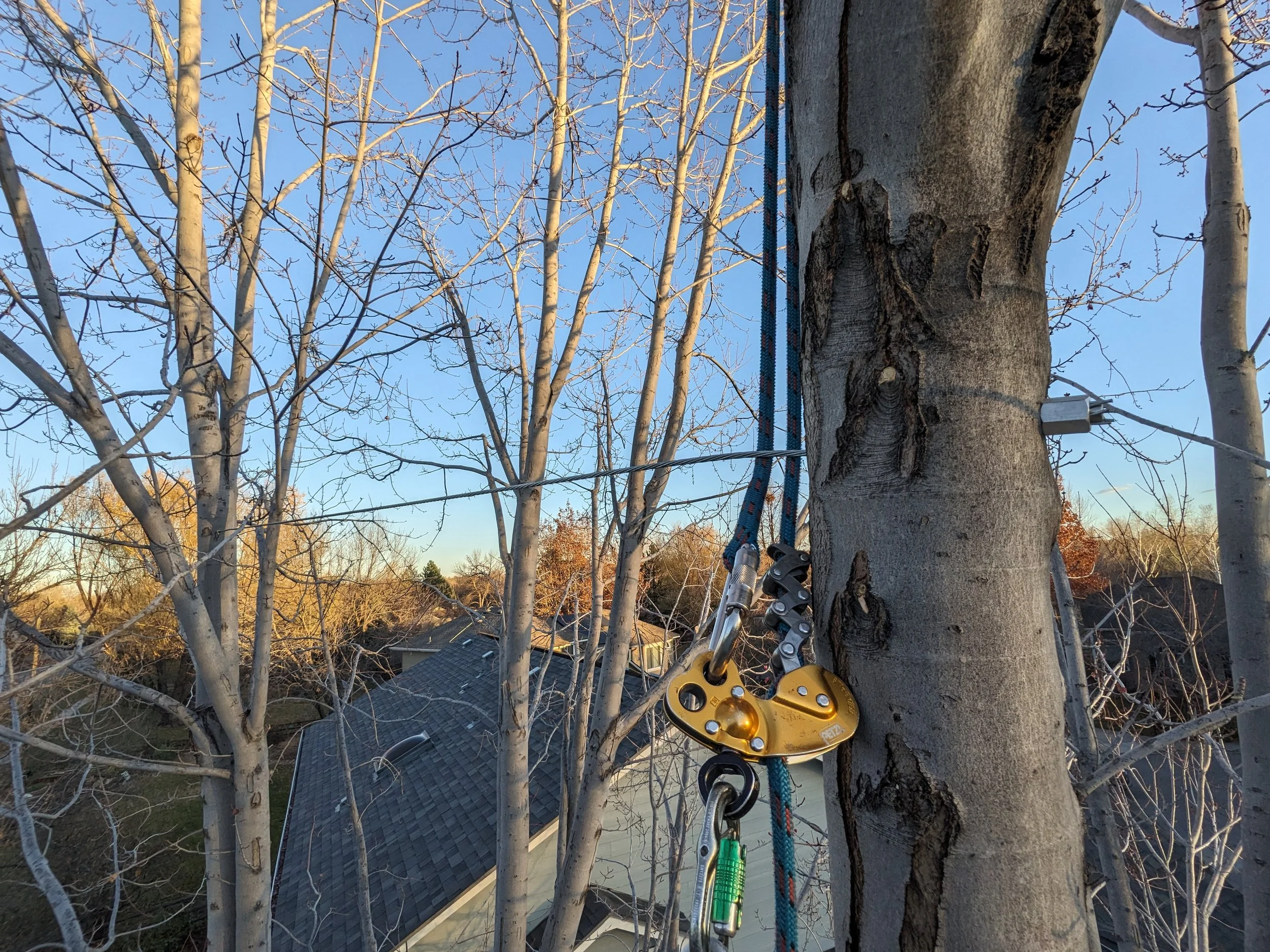
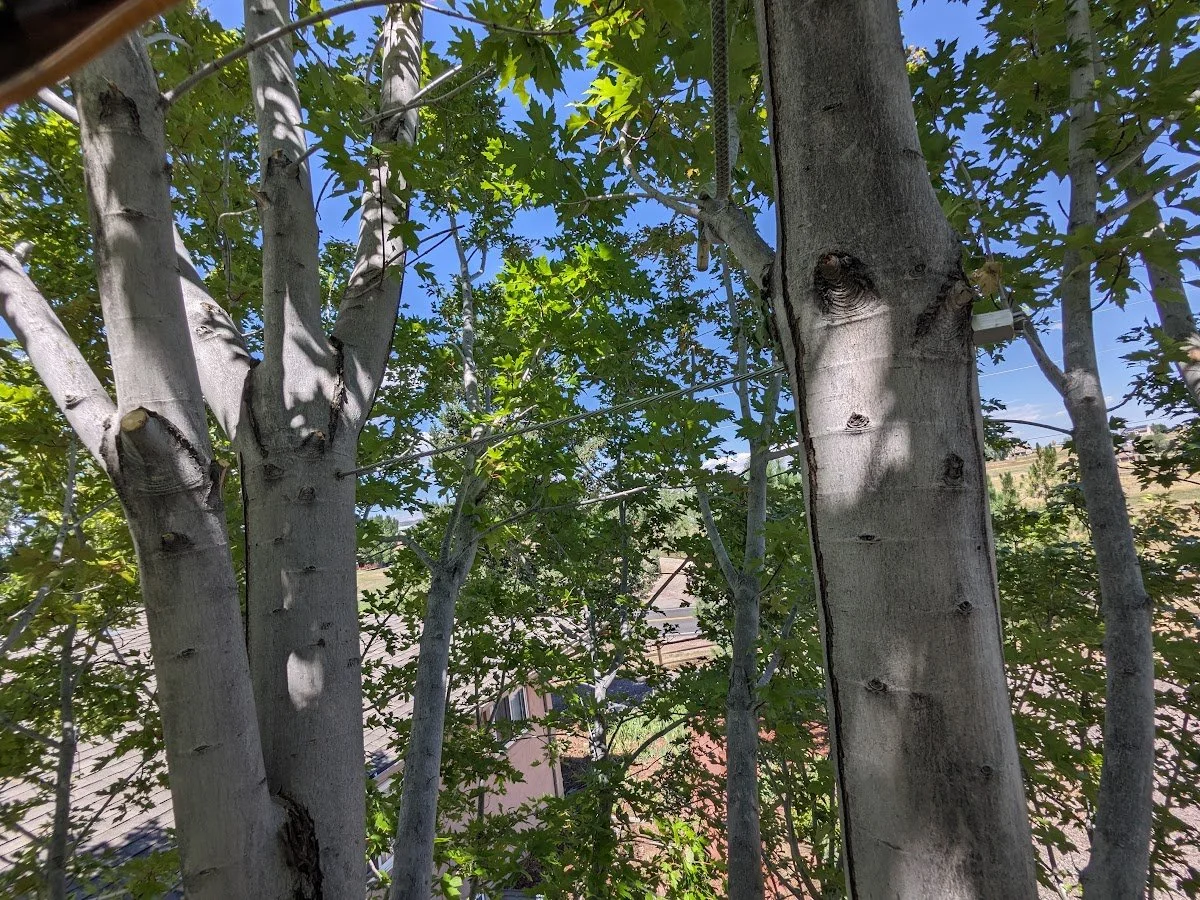
Cabling example: ‘Autumn Blaze’ maple
Maples are our number one tree that benefit from cabling. They are prone to narrow branch attachment angles, included bark, weak wood fiber, poor compartmentalization of decay, and hybrids that were developed for fast growth and large amounts of shade at the consequence of strong structure. Below are examples of a steel cables I installed in 'Autumn Blaze' hybrid maples using Rigguy wire stops.
Consulting
If you have questions about the health of your trees or want to know what's best for their care, ask for a consultation. High Bar Arborist Services can provide a written plan for your trees.